



HARRY WEBSTER 1917 – 2007
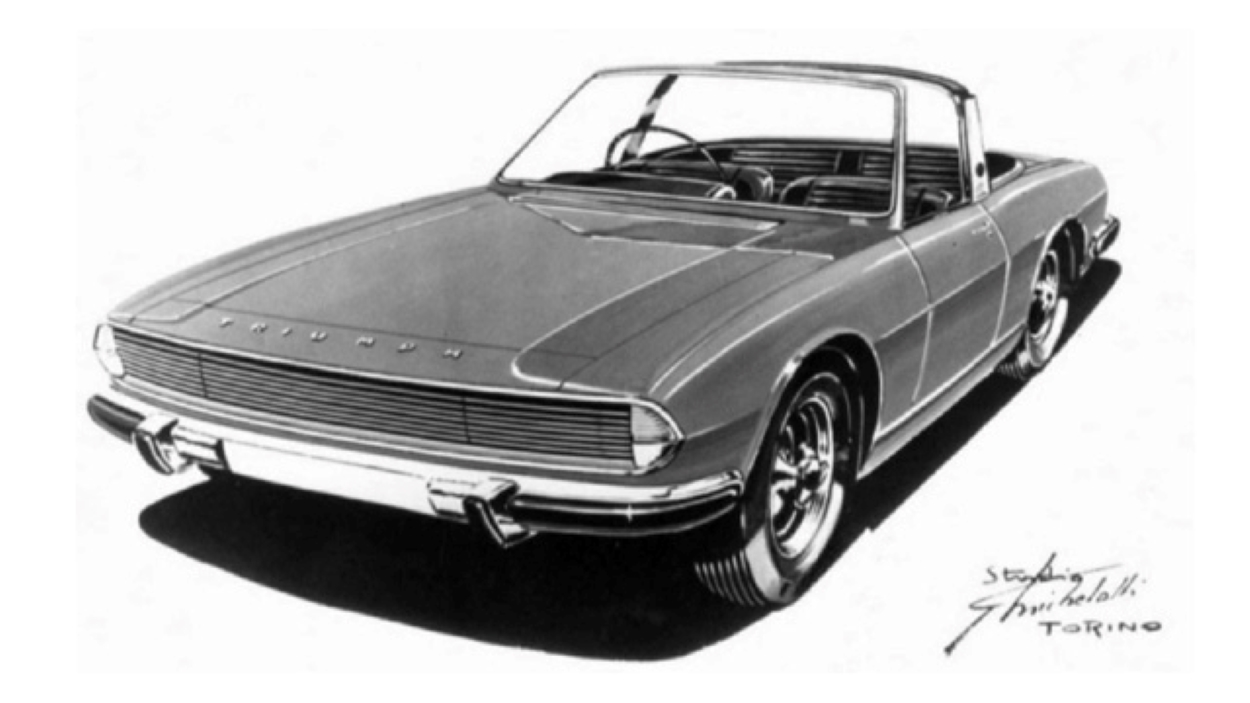
 Harry Webster, Chief Technical Director of Triumph was born in May 1917 and is the man credited with recognising the potential of the Michelotti mock-up which became the Stag. Harry insisted that the American market needed a V8 and hence our Stag was born.
Harry was Triumph’s long term Technical Chief and was responsible for the many of Triumphs cars – the Herald, Vitesse, Spitfire, GT6, 2000, 1300 a number of TR’s and the Stag. Harry started as an apprentice at Standard in 1932 and as a reminder he kept his framed pay tally on his wall in his den alongside the hand-painted Christmas cards from Michelotti. Harry was in charge of all Triumph engineering by 1968 when he became Technical Director of British Leyland until 1974 when he moved to AP. Harry always declared that he was flabbergasted to see the cars he helped produce become venerable classics spawning at least 14 separate enthusiasts clubs. In retirement Harry stayed close to his fellow engineers with regular meetings at the golf course and the Standard Triumph Club.
Some of you had the opportunity to meet Harry when he attended a co-ordinators meeting and later when I invited Harry and his fellow engineers to come on the SOC stand at the NEC in 1998 to celebrate 75 years of Standard Triumph. Celebrating the same anniversary Harry was one of the guests at the dinner the night before that hugely popular celebration when more than 1500 Standard Triumphs came together at the Heritage Centre. Harry was the obvious person to unveil the Standard Triumph Monument in Coventry in April 2000 and the plaque immortalises his role. He was proud to be an honorary member of most of the Standard Triumph clubs in the UK and abroad and I know from his phone calls that he read our magazine avidly. He loved his cars and my abiding memory will be of him standing outside his house in Kenilworth waving to the Triumphs passing by on the Shakespeare Run from Coventry. Those of us who knew him saluted him with a pip and a wave as we drove past.
Article written by Lesley Phillips
SPEN KING 1925 – 2010
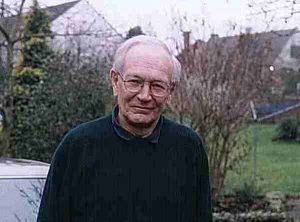 Charles Spencer ‘Spen’ King is probably best known as the engineer behind the original Range Rover of 1970, with Land Rover producing a special edition two door ‘CSK’ model in 1991 to honour him. Spen was one of the UK’s foremost automotive engineers and joined Rolls Royce in 1942 as an apprentice. At the end of hostilities Spen moved to Rover to work on their gas turbine JET 1 prototypes. Despite Rover being run by family members Spencer and Maurice Wilks, it was his skill as an engineer rather than being their nephew that saw him progress to the head of new vehicle developments in 1959.
He lead the design teams that created the Rover 2000 and SD1 models and the Triumph Stag, TR6 and TR7. He was appointed chairman of British Leyland technology in 1979 and oversaw a series of ECV (Energy Conservation Vehicle) concepts that used advanced aerodynamics and lightweight materials to reduce fuel consumption. This was many years before the likes of Volkswagen releasing their ‘Bluemotion’ series.
He was passionate about car safety and even in his retirement he campaigned the Government to legislate against unnecessarily thick windscreen pillars that he felt gave modern cars dangerous blindspots.
It is somewhat ironic therefore that his death was due to injuries sustained as a result of a collision between his bicycle and a van. Known as a modest and hardworking engineer he will surely be remembered as one of Britain’s most skilful automotive heroes.