

A Practical Guide to Using Modern – Fuels in Classic Cars
Introduction
The make-up of petrol has gone through many changes over the years and we have adapted our classic cars, by and large, to accommodate these changes successfully. With the introduction of E10 in September 2021 prompted me to do some research with a view to converting my classic cars to run on E10 and gain a better understanding of the effects of modern fuels on older normally aspirated engines.
The protection grade E5 high octane petrol is both expensive and is not widely available in all areas as we found out during a trip to Wales in September 2021, thank goodness for TESCO. Although the Government have given assurances that E5 will be available for the next 5 years, I think that this is more likely to be determined by market forces and availability will decline over time. In addition, with the ever mounting pressure to improve the environment, the levels of ethanol in petrol is likely to rise in the future, so we really need to get on board.
This article is a summary of my findings, having spoken to a number of experts and manufacturers for their advice and having read many reports on the effects of ethanol in petrol. I have to say it is not all bad news. The focus is on the practical aspects of living with ethanol and problems with using modern petrol in our classic vehicles. The way forward.
What is ethanol & why do we put it in petrol?
Ethanol is produced from plant based materials, principally sugar cane and corn which are widely available, cheap and sustainable. Ethanol is naturally produced by the fermentation process to produce alcohol which is further refined for use in fuels. Ethanol is a volatile, flammable, colourless liquid which contains approximately 35% oxygen by weight.
Due to the high oxygen content, when ethanol is mixed with petrol it acts as an octane booster which results in a cleaner burning fuel and a reduction in the harmful exhaust emissions released into the atmosphere. Ethanol contains approximately 33% less energy than petrol, so as you increase the level of ethanol, fuel consumption will increase. For E10 this equates to approximately 3% increase in fuel consumption, not that most people will notice.
E10 petrol has been widely used in the USA for many years and has also been the main grade in Europe since 2010. Much higher levels of ethanol have been added to petrol in other countries, such as Brazil and South Africa, and their vehicles have been successfully adapted to cope. The historical evidence indicates that the issues arising from the addition of ethanol to petrol can be successfully managed by classic vehicle owners.
Ethanol & modern fuels – compatibility with classic vehicles
There are 4 key areas of concern which need to be addressed.
- Corrosion of metal components.
- Elastomer compatibility – seals, flexible pipes, diaphragms, gasket materials, plastic floats and the like.
- Air / fuel ratio enleanment.
- Fuel evaporation.
Corrosion of metal components.
Compared with petrol, ethanol has increased acidity, conductivity and inorganic chloride content which can result in the corrosion of metal components. The biggest problem is that ethanol, when exposed to the atmosphere, absorbs water which, being heavier then petrol settles to the bottom of the fuel tank, fuel pump, carburettor float bowls and the like. The increased acidity of ethanol combined with absorbed water leads to the formation of acetic acid which is highly corrosive. This leads to corrosion which is generally localised and concentrated leading to perforation of the metal components and fuel leaks, ref fig 1. To avoid the problem of water absorption during storage at the refineries, ethanol is only added to the petrol when it is shipped out in tankers for delivery to the forecourts.
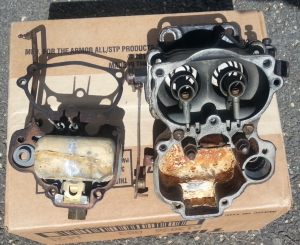
Fig 1. Corrosion in the float chamber caused by untreated E10 petrol & water.
The principal metals subjected to this type of attack in our fuel systems are steel and aluminium. Whilst copper, brass and solder will also be affected, these have not been found to be a major problem. The key to preventing this type of corrosion is to exclude, as far as possible water entering the fuel system.
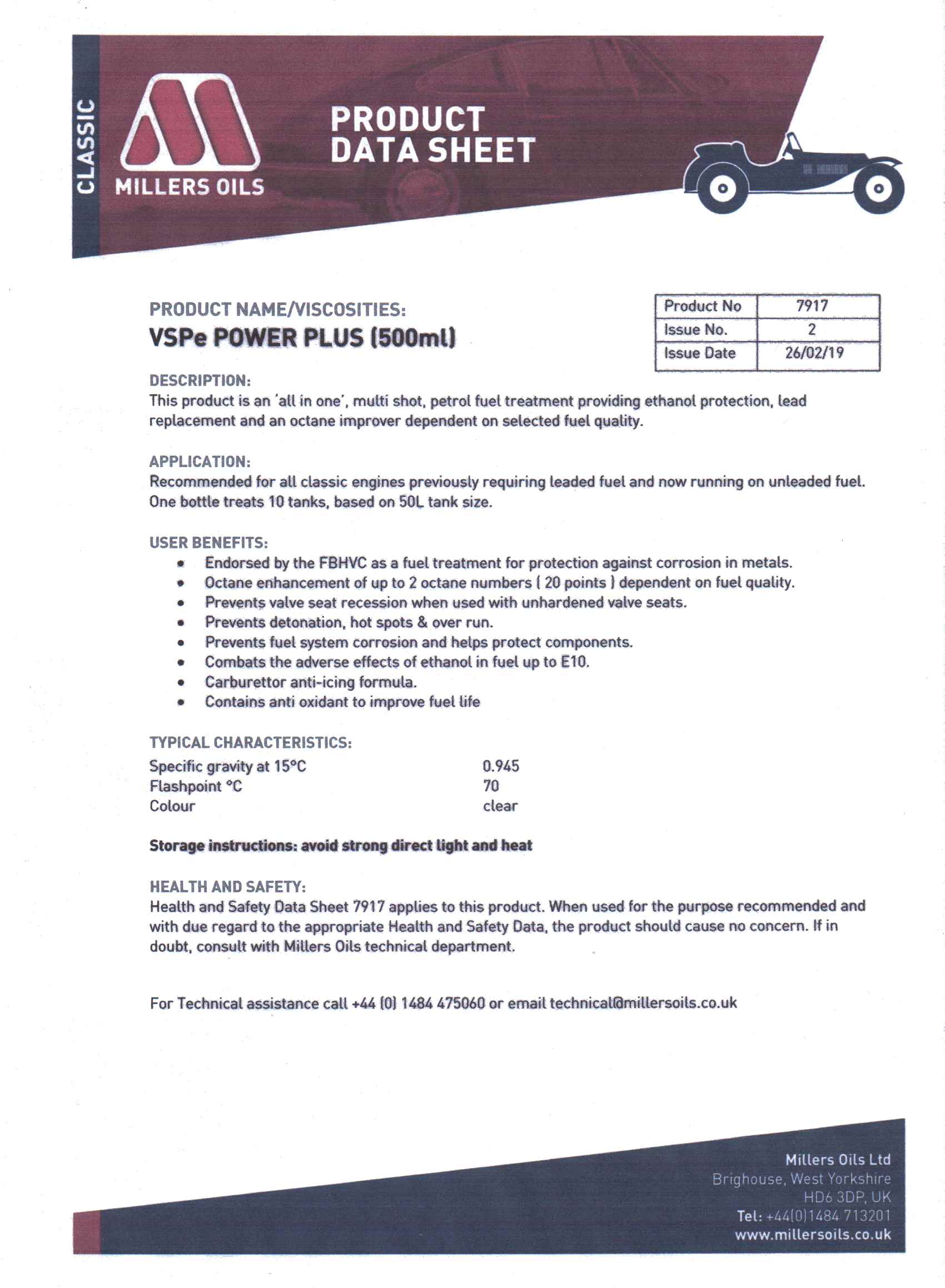
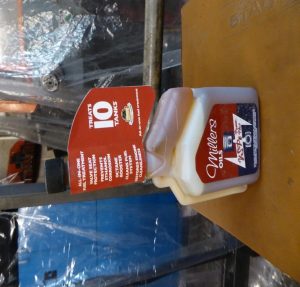 Fortunately, there are corrosion inhibitors available which are well proven and very effective at preventing the corrosion of metallic components in our fuel systems. They work by inhibiting this corrosive behaviour by joining with any free bonds on the ethanol. This effectively stops the corrosion from even starting. There are many of these products on the market, I have used Millers VSPe, multi shot, for over 10 years and have not experienced corrosion of metallic components in the fuel systems of any of my classic cars with E5 petrol. Many of these products have other benefits such as acting as an octane booster, reducing valve seat recession, preventing running on and improved fuel life.
More drastic alternatives are to change the fuel tank and lines to 18.8 Stainless Steel or a modern polymer material. This would be expensive and is not really necessary.
Treating the inside of steel or aluminium fuel tanks with a fuel resistant coating is not recommended as the surface preparation cannot be guaranteed and therefore the coating is likely to flake off causing blockages in the fuel system.
Elastomer compatibility
Ethanol is absorbed into many elastomer materials over time which then swell and soften resulting in weakening of the material structure. On drying out shrinkage and cracking occurs leading to fuel leaks, ref fig 2. The type of components affected are;
- Flexible fuel hoses.
- Seals & O rings
- Diaphragms in carburettors & fuel pumps.
- Some gasket materials.
- Plastic carburettor floats.
- Fuel filters.
- Fuel injection metering units & injectors.
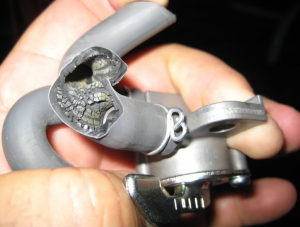
Fig 2. Effect of ethanol on an incompatible fuel pipe material
Unfortunately, fuel additives will not prevent degradation of the above components if they are not manufactured from ethanol compatible materials.
The good news is that having spoken to Burlen Fuels, who supply and manufacture many of the parts used in our classic vehicle fuel systems, they changed 10 years ago to using ethanol compatible materials where possible, including all of their overhaul kits and items listed above.
Fuel injection metering units and injectors have been ethanol compliant for many years. The seals and diaphragms used by overhauler’s were changed from Nitrile to Viton with the introduction of lead free petrol in 1998.
With regards to fuel hoses there are many standards, but the one most used by the automotive industry is The Society of Automotive Engineers (SAE) J30. For those of you who are interested, this is freely available online. This specification covers many different types of fuel hoses, but the one which is most suitable and readily available for our purposes is SAE J30 R9. (There are others which would be acceptable within this standard) This is available in bore sizes ranging from 6mm to 13mm and imperial with an operating temperature range of -34ºC to +135 ºC and a working pressure of 100psi. For those who are using high pressure fuel injection systems SAE J30 R12T3 has a working pressure of 145psi. The working pressure is normally printed on the hose and is often much higher than the standard demands.
All hoses manufactured to this standard have the specification printed on the outside of the hose, ref fig 3. If you cannot verify the hose specification, the chances are it does not meet the required standard, my advice is don’t buy it. There are many hoses available, particularly on the internet which are simply marked FUEL HOSE, this is not acceptable.
I would not recommend the use of braided fuel hose as it is not possible to visually determine the condition of the hose material.
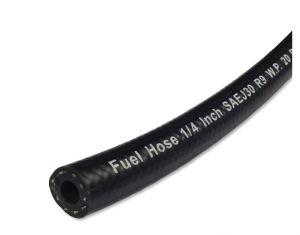 Fig 3. SAE J30 R9 ethanol compliant fuel hose showing the correct identification including the working pressure. Which in this case is 20 bar or 290 psi.
Air / fuel ratio enleanment
Ethanol has a high oxygen content, approximately 35% by weight, which results in fuel mixture enleanment when blended with petrol. Petrol containing 10% ethanol for example would result in a mixture leaning effect of approximately 2.6%. This may manifest itself in the form of stalling, hesitations, loss of power, flat spots and the like. It may also result in hotter running of the engine and fuel evaporation which is something the majority of us will have experienced in recent times, particularly on a hot day.
The way to combat this is to adjust the mixture strength (enrichment) to counteract this problem.
Fuel evaporation
The high volatility of modern petrol is the main cause of what is often referred to as The Hot Restart Problem. At a typical engine bay temperature of 50ºC only approximately 8 % of petrol from the 1960s would have evaporated in comparison to 25% of modern petrol. This is compounded by the seasons as petrol blend is more volatile in the winter months to aid the problem of cold starting.
Many classic vehicles suffer from The Hot Restart Problem. When a vehicle is stopped or moving slowly in traffic, the temperature in the engine bay rises and with little or no petrol flowing through the fuel pump, the petrol starts to boil. Under these conditions the carburettor cannot deliver the correct mixture when there are bubbles and/or vapour in the petrol. This weakens the mixture and causes the engine to stop and prevents it from restarting. I have experienced this problem on my Stag and both TR’s from time to time and it is most inconvenient.
Unfortunately, there is no magic wand to fix the problems with modern petrol, but there are a number of things which can be done to reduce the severity of the problem.
- Reduce the temperatures in the engine bay.
- Correctly tune the engine.
- Reduce the heat getting to the fuel system components.
Reduce the temperatures in the engine bay
When driving normally the air flow through the front of the car dissipates the heat from the engine. When in slow moving traffic or stationary, the heat in the engine bay will rise. It is important to keep the engine bay temperatures as low as possible, the following measures will help.
- Install a thermostatically controlled electric fan which is designed to run on for at least 5 minutes after the engine has stopped.
- Ensure a free flow of air is able to enter the engine bay from the front of the car.
- Check that the radiator and cooling system are functioning correctly.
- Consider a modern core in the radiator with increased cooling capacity.
- Park in a sheltered area where possible on very hot sunny days.
Correctly tune the engine.
- If the engine is running with the timing retarded you will not only be losing power, the engine will run hotter. It is important to advance the timing as far as possible without the engine pinking under high load.
- Check with a strobe that the distributor advance is working correctly, rpm versus degrees advance. This will need to be done in two parts, firstly with the vacuum advance blanked off and secondly with the vacuum advance, where fitted, connected. If the distributor is worn, springs damaged or incorrectly fitted, the mechanical advance will not be repeatable.
- Richen the mixture strength at idling to give a CO reading towards the top end of the range of 0.5% to 2.5%. The best way of checking that the mixture is to check the colour of the spark plugs after a run. They should be a grey/light tan colour for optimum performance. Light grey is too week and dark brown/black is too rich.
- Check the float levels are correctly set and the carburettors are not worn causing air leaks, weakening the mixture.
- The best way of tuning the engine is on a rolling road to optimise the power output and engine efficiency for the particular fuel being used.
Reduce the heat getting to the fuel system components.
- Insulate or re-route the fuel lines where they are subject to extreme heat in the engine bay. Insulation will only delay the fuel temperature rise, but this may be sufficient in the majority of cases.
- Insulated exhaust shields between the exhaust manifold and carburettors. These are already fitted to many classic vehicles.
- Insulation blocks between the inlet manifold and carburettors. Again, many classic vehicles already have these fitted as standard.
- Insulate the exhaust manifold to reduce radiated heat into the engine bay.
Storage
When laying up your vehicle for a period of time or over the winter months using either E5 or E10 petrol it is advisable to undertake the following.
- Use a fuel additive with a corrosion inhibitor, octane booster and anti-oxidant to improve fuel life. For storage I tend to use a double dose.
- Fill the tank full of petrol to reduce the risk of condensation in the tank.
- Drain the carburettor float chambers. On the stag, operate the fuel cut off switch and run the engine until it stops. Both my TR’s are fitted with an in line mechanical shut off valve, which serves the same purpose.
- Start the vehicle and run it up to operating temperature at least once per month this will help prevent coagulation of the petrol and keep the fuel system clean and operational. Many problems with fuel systems are simply caused by lack of use.
What do I need to do to run my Classic car on E10 petrol?
If you decide to run your classic vehicle on E10 petrol, it is essential that the fuel system is maintained properly and remains in good order. In addition, the fuel hoses need to be changed to ones which are compatible with ethanol along with any other elastomer components together with the use of an aftermarket fuel additive.
It is also recommended that the engine is correctly tuned and that steps are taken to reduce the engine bay temperatures as far as possible.
Having already undertaken the essentials and with the addition of an electric fan to keep the engine bay cool in slow moving traffic, I don’t consider it necessary to undertake further modifications at this stage. The problem being that the other options on the table are far more difficult to implement, have only limited effect and may not be necessary.
I hope that that my findings are of help in deciding the way forward. For those of you who want to study the subject in more depth the following information may be of interest. Additional information along with this article are listed on the club website.
FBHVC Essential Guide to Fuels – By Nigel Elliott.
https://www.fbhvc.co.uk/an-essential-guide-to-fuels
Classic Engines Modern Fuel. The problems & Solutions – By Paul Ireland.
SAE J30 Standard for Fuel and Oil hoses.
Millers VSPe Technical data sheet.
Steve Buxton. (2022)
In depth technical information regarding affects on hoses may be found by clicking the following link: